Legacy ERP Systems Are Slowing AI Readiness Across Modern Corporations

Legacy ERP Systems Are Slowing AI Readiness Across Modern Corporations

AI readiness is now gradually becoming an enterprise architecture challenge before it becomes an innovation challenge.

In today’s AI-driven business era, organizations have started embracing intelligent technologies to improve process automation, support data-driven decision-making, and enhance operational productivity. The problem is that their AI initiatives are hitting a ceiling. This is not due to the lack of talent or technology but because their existing ERPs were not built with the capabilities required to support connected, real-time operational intelligence at scale.

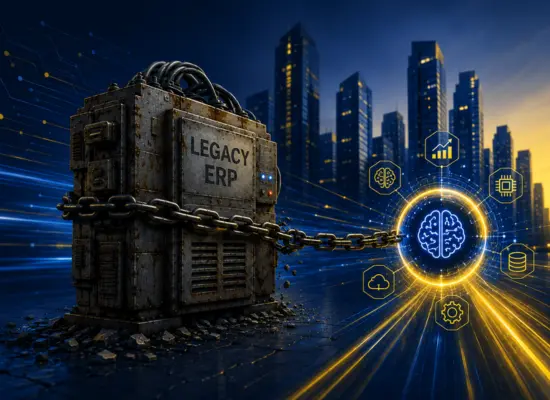
From large to mid-sized corporations, finance, workforce operations, planning, reporting, and business workflows still function across fragmented environments that limit visibility, slow coordination, and increase dependency on manual intervention. This is where the operational limitations of legacy ERP systems are proving harder to ignore.

Modern corporations need a lot more than transactional continuity. They need connected enterprise environments that can support scalability, interoperability, real-time visibility and long-term adaptability across functions. As organizations increasingly race toward data-driven operations, the conversation around ERP modernization is quickly moving from infrastructure upgrades to broader business transformation priorities.

It is this changing landscape that is bringing cloud ERP platforms like Workday to the forefront. Such modern ERP platforms enable a more connected and scalable enterprise environment better aligned to long-term AI readiness.

Why Legacy ERP Systems Are Becoming AI Bottlenecks

While the operational barriers surrounding legacy ERP systems are many, three major factors act as AI bottlenecks.

  1. Fragmented enterprise data
    As highlighted in Workday’s perspective on legacy ERP environments, disconnected systems often increase operational complexity while restricting organizational agility and innovation. They cause leadership teams to struggle to get timely access to consolidated business insights, further hindering agile, data-driven decision-making.

    Besides restricting data-backed business insights, disconnected systems across finance, HR, procurement, and other core business functions give rise to inconsistencies, chances of errors, and delays in cross-functional coordination.

    From an AI-driven business standpoint, fragmented enterprise data can significantly reduce operational visibility, slow enterprise responsiveness, and limit the effectiveness of intelligent initiatives that depend heavily on connected workflows, real-time enterprise intelligence, and seamless operational coordination across functions.

  1. Rigid ERP architecture
    When legacy ERP systems continue operating within heavily customized and integration-dependent environments, businesses often find themselves spending more time sustaining system compatibility than improving operational intelligence. With time, it becomes challenging to maintain fragmented, rigid integrations, upgrade complex workflows and data structures, and support legacy customizations, thereby increasing operational costs and declining enterprise adaptability.

    In AI-driven environments where enterprise responsiveness depends on connected data flows and real-time visibility, these rigid ERP structures can gradually limit an organization’s ability to operationalize intelligence across functions, scale automation efficiently, and respond dynamically to evolving business conditions. This operational rigidity can slow enterprise responsiveness and make intelligent transformation initiatives significantly harder to sustain at scale.

  1. Manual operational dependencies
    Despite increasing investments in intelligent technologies, many enterprises still rely heavily on spreadsheets, manual reconciliations, disconnected approvals, and human intervention to sustain coordination across systems. In fragmented ERP environments, employees often spend considerable time validating information, consolidating reports, and manually bridging operational gaps between functions.

    While advancing toward AI readiness, these manual dependencies tend to create inconsistent data flows, delayed operational visibility, and disintegrated execution across workflows.

How Workday Cloud ERP Supports AI-Ready Enterprise Operations

  1. An interconnected data core for more intelligent operations
    As stated in Workday’s perspective on the next generation ERP, modern enterprise systems are increasingly expected to support intelligent, connected, and continuously evolving business operations rather than simply transactional processing. One of the defining capabilities of Workday lies in its interconnected data core that brings together all core business functions including HR, finance, payroll, and operational workflows within a unified cloud-native environment.

    For small and mid-sized corporations managing expansion across multiple business units and regions, such a well-connected structure becomes beneficial to keep data consistent, accessible, and aligned across various departments. This provides improved enterprise-wide visibility, enables faster operational interaction and responsiveness, and generates more consolidated business insights for AI readiness and intelligent decision-making.

  1. Built-in flexibility supports evolving AI needs
    Unlike traditional, rigid ERP infrastructures, Workday, as a cloud ERP platform does not rely heavily on complex customizations and integrations. It is extensively designed as a continuously evolving system capable of adapting alongside changing business and operational priorities.

    Through its adaptable architecture and continuous innovation model, Workday enables growing corporations to support evolving AI-driven operational requirements while maintaining greater scalability, enterprise continuity, and cross-functional responsiveness. This further allows them to focus less on sustaining infrastructure limitations and more on operationalizing intelligent business capabilities across the organization.

  1. Continuous innovation fosters AI-driven business operations
    Another key advantage of Workday Cloud ERP is that it enables organizations to accelerate operational capabilities without repeatedly going through large-scale infrastructure amendments. While traditional ERP ecosystems depend on lengthy and resource-intensive upgrades, Workday operates through a continuous delivery model where innovations, feature enhancements, and platform updates are introduced seamlessly within the cloud environment.

    Whether an organization is introducing AI-supported forecasting, intelligent workforce planning, or more data-driven operational workflows, Workday’s innovation model enables these evolving AI capabilities to be integrated smoothly into enterprise operations without causing additional maintenance or extensive infrastructure reconfiguration.

  1. Emerging agentic AI models depend on unified ERP environments
    As businesses continue exploring next-generation AI operating models such as agentic AI, corporations are gradually moving beyond isolated automation initiatives toward more autonomous, context-aware, and intelligence-driven operational ecosystems. Through its unified cloud-native architecture, interconnected data environment, and continuously evolving operational framework, Workday enables organizations to maintain the level of enterprise connectivity, workflow alignment, and real-time visibility increasingly required to support emerging agentic AI capabilities.

Conclusion

The future of AI-enabled business operations will not be determined solely by how aggressively organizations adopt AI technologies, but by whether their enterprise foundations are capable of supporting connected intelligence at scale. As business ecosystems become more connected and intelligence-driven, the limitations of legacy ERP systems become more visible. The need for more adaptable and cloud-native enterprise environments continues to accelerate the shift toward ERP modernization.

With its interconnected operational framework, continuous innovation model, and cloud-native architecture, Workday enables organizations to build more connected and scalable enterprise environments capable of supporting evolving intelligent business operations more effectively.

At E1 Consulting, we help organizations implement, optimize, and modernize Workday environment through scalable transformation strategies aligned to evolving business priorities and long-term AI readiness goals.

Connect with E1 Consulting

Whether you are modernizing legacy ERP systems or optimizing your existing Workday environment, get in touch with E1 Consulting and start building a more intelligent and integrated enterprise ecosystem.

FAQs

  1. Why is ERP modernization important for AI-driven enterprises?
    ERP modernization for AI-driven enterprises is becoming increasingly important because intelligent business operations depend heavily on connected enterprise data, real-time visibility, and scalable operational workflows. Modern cloud ERP environments help organizations support more responsive, data-driven, and adaptable enterprise operations.

  1. How does Workday support AI readiness?
    One of the biggest ways Workday supports AI readiness is through its interconnected cloud-native architecture that enables organizations to maintain unified enterprise data, connected workflows, operational visibility, and continuous scalability across functions. This creates a stronger foundation for intelligent and AI-driven business operations.

  1. How do legacy ERP systems impact AI readiness?
    One of the major ways legacy ERP systems impact AI readiness is by creating fragmented data environments, rigid operational structures, and manual workflow dependencies that limit enterprise responsiveness and intelligent decision-making. Over time, these operational limitations can make it difficult for organizations to scale AI-driven business operations effectively.

Corporations Seek Trusted, Proactive AMS Partners to Sustain Long-Term Workday Transformation

Corporations Seek Trusted, Proactive AMS Partners to Sustain Long-Term Workday Transformation

Your Workday HCM implementation may be complete, but is your AMS (Application Management Services) strategy still advancing transformation?

From mid-sized corporations to large enterprises, many organizations are beginning to realize that the success of a Workday HCM solution is not determined at go-live. It is determined months and years later, when transformation roadmaps lose alignment, workforce complexity increases, operational dependencies expand, and organizations must continuously adapt Workday to changing business realities.

Modern organizations are evolving faster than traditional AMS models were designed to support. Workforce models are shifting. Organizational structures are becoming more fluid. Decision-making cycles are accelerating. Leadership expectations around workforce intelligence, adaptability, and operational responsiveness are significantly higher than they were even a few years ago.

The changes in expectations are causing corporations to drive away from traditional AMS services centered primarily around operational maintenance and transactional support toward more strategic, forward-thinking AMS partnerships capable of continuously evolving the Workday environment.

Why Corporations Are Re-Evaluating Their Workday AMS Strategy

According to McKinsey’s transformation insights on sustaining competitive advantage, organizations that achieve long-term transformation success are those capable of continuously adapting their operating models, workforce strategies, and organizational capabilities alongside evolving business demands. This is significantly changing how corporations evaluate the role of post-go-live Workday AMS services and long-term transformation support.

The challenge to keep pace with the ever-evolving workforce ecosystems becomes more visible when traditional AMS engagements struggle to improve operational flexibility, employee experiences, and organizational responsiveness to change.

Where Traditional Workday AMS Models Are Falling Short

Traditional post go-live support structures were originally designed to stabilize Workday environments after implementation. While this approach may keep up operational continuity in the early stages of adoption, it often becomes difficult to sustain as workforce expectations, organizational priorities, and transformation goals continue evolving.

Some of the most common gaps organizations begin experiencing include:

  1. Workday evolution becomes secondary to operational maintenance: Traditional AMS models often prioritize issue resolution and day-to-day maintenance over long-term Workday optimization. Internal teams remain invested in managing recurring support activities, release coordination, approvals, and follow-ups. This somehow curbs the growth of strategic value of Workday across the business.

  2. Support relationships become heavily transactional: Many organizations eventually find themselves operating within highly ticket-driven engagement structures. While day-to-day issues continue getting resolved, the partnership itself often contributes very little toward broader transformation priorities.

  3. Delayed transformation initiatives: When internal HR and IT teams remain occupied with operational coordination and ongoing support dependencies, workforce transformation initiatives such as process modernization, experience enhancement, and organizational agility improvements start losing executive visibility and momentum.

  4. Lack of strategic workforce alignment: Conventional post go-live support structures may not always evolve alongside workforce strategies, organizational restructuring, or changing operational models. This gradually creates disconnect between what the business expects from Workday and how the platform is actually being utilized.

What Leaders Expect from Workday AMS Partners Today

Considering the aforementioned challenges, businesses are increasingly evaluating if their existing Workday partner is capable of continuously aligning the Workday environment with evolving workforce, operational, and business priorities.

The question today is not: “Who can support our Workday environment?”; it is: “Who can help Workday remain aligned with where the business is going next?”

As a result, expectations from Workday AMS services are being fundamentally redefined.

  1. Ability to continuously extract greater business value from Workday: Organizations today root for Workday partnerships that contribute far beyond day-to-day system administration and operational support. Leadership teams are seeking proactive partnerships capable of continuously uncovering new opportunities to enhance workforce intelligence, strengthen operational agility, boost employee experiences, and maximize the long-term business impact of their Workday solution.

  2. Business-aligned Workday evolution beyond reactive support: Modern Workday AMS engagements are expected to serve as strategic transformation partnerships, not just transactional support relationships. Whether there is an organizational restructuring or geographic expansion, the Workday partner should be able to align the platform capabilities with evolving business needs rather than operating at an independent level.

  3. Proactive governance and operational foresight: When organizations undergo acquisitions, workforce restructuring, or large-scale policy changes, maintaining governance consistency across the Workday environment often becomes significantly complex due to shifting reporting relationships, approval hierarchies, and compliance requirements. This is why corporations increasingly value Workday partnerships that can strengthen governance visibility, improve release preparedness, and support operational alignment during periods of rapid organizational change.

  4. Scalability that evolves with organizational growth: Expanding across geographies, onboarding larger workforce populations, or adopting new workflows call for a well-connected and operationally active Workday environment. Without the right post-go-live support strategy, internal HR and IT teams can become increasingly occupied with coordination overhead, process dependencies, and operational follow-ups. Hence, Workday partners should not only stabilize the platform after implementation but make it flexible enough to cope with organizational growth.

A strong example of this evolving expectation can be seen in Trimble’s Workday transformation journey. Here, the organization focused on improving global operational efficiency, strengthening workforce visibility, and creating greater consistency across its evolving HR ecosystem. As workforce operations expanded globally, maintaining operational alignment and scalability across regions became increasingly complex, driving the need for a more connected and continuously optimized Workday environment.

To support these evolving operational demands, Trimble utilized Workday to build a more agile and scalable HR ecosystem capable of enabling long-term organizational adaptability and workforce transformation. The case reflects a broader realization among modern corporations that successful implementation alone is not enough to sustain transformation momentum. Proactive Workday partners who can continuously optimize the Workday ecosystem, improve operational maturity, and help the organization adapt more effectively to evolving workforce and business priorities.

Conclusion

To adhere to the dynamic workforce environment and evolving business priorities, organizations today increasingly look for solution-focused, proactive Workday AMS services that can help them sustain Workday transformation beyond go-live. While traditional AMS models heavily rely on reactive support structures and operational maintenance, modern corporations increasingly prioritize strategic, post go-live collaboration capable of continuously optimizing the Workday ecosystem, improving organizational agility, and supporting long-term workforce evolution.

Standing as a trusted and proactive Workday AMS partner, E1 Consulting brings together a team of experienced Workday consultants with deep expertise in configuring, optimizing, and sustaining momentum across complex Workday ecosystems spanning multiple industries. Through scalable AMS capabilities, proactive optimization strategies, and governance-focused support, E1 helps organizations continuously evolve their Workday HCM system while aligning workforce operations with changing business priorities and long-term transformation goals.

End your search for a proactive Workday AMS services provider with E1 Consulting – Connect with us!

FAQs

  1. What is Workday HCM and how is it beneficial for mid-sized corporations?
    A Workday HCM solution is a cloud-based human capital management platform designed to help organizations streamline HR operations, workforce planning, payroll, talent management, reporting, and employee experiences through a unified system. For mid-sized corporations, Workday helps improve operational agility, workforce visibility, decision-making, and scalability while supporting long-term workforce transformation initiatives.

  1. What are the benefits of proactive Workday AMS services after implementation?
    Proactive Workday AMS services help organizations move beyond reactive issue resolution by continuously optimizing the Workday environment, improving operational agility, strengthening governance alignment, and supporting evolving workforce priorities. They also help businesses sustain long-term Workday transformation momentum after go-live.

  1. How to choose the right Workday AMS partner for long-term transformation support?
    Organizations typically look for a Workday AMS partner with strong expertise in continuous Workday optimization, governance support, release readiness, workforce scalability, and strategic advisory capabilities. A proactive AMS partner should also be capable of aligning the Workday ecosystem with evolving business and workforce priorities over time.

Why Your Workday Investment is Not Delivering the Expected HR Transformation

Why Your Workday Investment is Not Delivering the Expected HR Transformation

When it comes to HR transformation technology, Gartner notes that many organizations are still in the middle of transitioning from legacy on-premises systems to cloud-based HR platforms, while simultaneously being forced to rethink their long-term HCM strategy and operating models. For many corporations, this transition has accelerated investments in platforms like Workday with the expectation of achieving large-scale HR transformation.

However, for growing businesses and mid-sized corporations, the real challenge begins after implementation. Unlike large enterprises with dedicated HRIT teams and mature transformation offices, mid-sized organizations often operate with lean HR resources, evolving business structures, and rapidly changing workforce demands. As the business grows, HR teams are simultaneously managing expansion, compliance changes, acquisitions, workforce scaling, and operational restructuring, all while trying to stabilize Workday adoption across the organization. As a result, the expected Workday HR transformation may remain limited without continuous optimization.

Post Workday Implementation Challenges: When HR Becomes Transactional Instead of Transformational

The major barrier to Workday HR transformation is not system functionality but the operational carryover. In an effort to avoid additional cost, disruption, or process restructuring, many growing and mid-sized corporations simply migrate existing HR workflows into Workday without fundamentally redesigning how HR should operate in a more agile, digital environment.

Without a structured Workday optimization approach, organizations often begin facing several post-implementation challenges, including:

  • Low adoption across managers and employees despite successful go-live
  • Manual workarounds and shadow processes outside the Workday environment
  • Inconsistent workforce reporting and fragmented data visibility
  • Delayed approvals and inefficient HR workflows carried over from legacy systems
  • Reactive HRIT support models focused on issue resolution rather than optimization
  • Underutilization of new Workday releases and AI-driven capabilities
  • Difficulty scaling HR operations alongside organizational growth and restructuring


This challenge is increasingly visible across organizations modernizing legacy ERP environments. Recent Workday insights on legacy ERP limitations highlight how fragmented data, rigid processes, and operational silos continue to prevent organizations from realizing the full strategic value of modern cloud platforms. As a result, without fully eliminating legacy HR operating models and continuously optimizing the Workday environment, Workday risks becoming a transactional HR system rather than a true driver of transformation.

Why Continuous Workday Optimization Matters After Go-Live

While large enterprises often demonstrate HR transformation at scale, their Workday journeys offer an important lesson for growing and mid-sized corporations: long-term value is rarely achieved through implementation alone, but through continuous optimization as workforce structures, business priorities, and operational demands evolve.

  1. Standardizing HR operations as the business scales
    At Philips, HR transformation was approached as a phased and continuous journey rather than a one-time implementation initiative. By progressively expanding Workday capabilities across global operations, the organization focused on simplifying HR processes, improving consistency, and creating a more standardized workforce experience across teams and regions. This gradual optimization approach helped Philips continuously align HR operations with evolving business needs instead of treating transformation as a fixed post-go-live outcome.

    For growing and mid-sized corporations, this highlights a critical reality: operational complexity does not begin at enterprise scale—it starts much earlier during expansion, acquisitions, geographic growth, or workforce restructuring. Without standardized HR workflows and continuous Workday optimization, organizations often end up carrying fragmented processes and inconsistent employee experiences into larger stages of growth.


  1. Preventing operational fragmentation as market evolves
    One of the biggest risks for growing and mid-sized corporations is not outgrowing Workday—it is unknowingly recreating legacy HR complexity inside a modern cloud platform. As organizations expand, restructure operations, or scale workforce models, HR processes naturally evolve. Without continuous alignment, Workday environments can gradually accumulate fragmented workflows, inconsistent reporting structures, and operational workarounds that reduce strategic visibility over time.

    This is why continuous Workday optimization matters far beyond system maintenance. It ensures that Workday continuously adapts to changing business realities, workforce expectations, and operational priorities—preventing the platform from becoming reactive and transactional.


  1. Improving workforce visibility for faster decision-making
    As organizations grow, workforce data often becomes increasingly difficult to interpret across departments, business units, and reporting structures. Even after Workday implementation, many mid-sized corporations continue struggling with inconsistent reporting logic, duplicate data practices, and limited visibility into workforce trends because optimization efforts slow down after go-live.

    Continuous refinement of reporting structures, dashboards, approvals, and analytics frameworks enables organizations to maintain reliable workforce visibility as the business evolves. For growing corporations operating with lean HR teams, this directly impacts the ability to make faster workforce decisions, improve planning accuracy, and respond more effectively to operational change.


  1. Sustaining Workday adoption beyond implementation
    As organizations grow, the way employees, managers, and HR teams interact with Workday naturally changes. New business structures, evolving approval hierarchies, workforce expansion, and shifting operational priorities gradually reshape how HR processes function across the organization. When the Workday environment fails to evolve alongside these operational changes, employees often begin relying on parallel processes outside the platform to maintain speed and flexibility.

    For growing and mid-sized corporations, this creates a critical but often overlooked transformation challenge. Workday may continue functioning as the system of record, while actual workforce operations increasingly move into spreadsheets, email-driven approvals, and manager-led workarounds. Over time, this weakens data consistency, reduces workforce visibility, and limits the organization’s ability to scale HR operations strategically. Continuous Workday optimizations help ensure that workflows, approvals, reporting structures, and user experiences continuously adapt to changing operational realities, allowing Workday to remain aligned with how the business truly operates as it grows.

Execution in Practice: Stabilizing Workday Post-Implementation with E1 Consulting

A practical example of why Workday optimization matters can be seen in E1 Consulting’s post-implementation Workday AMS engagement. In this case study, the Client organization was facing ongoing operational inefficiencies after go-live, including reporting inconsistencies, workflow gaps, and growing support demands that limited overall HR effectiveness. Through a structured Workday AMS approach, E1 Consulting helped stabilize the environment by optimizing configurations, improving reporting accuracy, streamlining support processes, and enabling continuous system enhancements aligned with evolving business needs. This allowed the organization to improve operational efficiency, strengthen Workday adoption, and maximize long-term value from its Workday investment.

To read more about this case study, click here.

Conclusion

Workday implementation may modernize HR systems, but transformation only happens when the platform continuously evolves alongside the business. As organizations grow, many unintentionally recreate legacy complexity through fragmented workflows, manual workarounds, and inconsistent workforce processes that slowly reduce the strategic value of Workday. For growing and mid-sized corporations, continuous optimization is what keeps Workday aligned with operational reality.

At E1 Consulting, we help organizations move beyond post-go-live stabilization through our flexible support models, exclusively designed to improve adoption, streamline HR operations, strengthen workforce visibility, and maximize long-term business value from their Workday investment.

Want to know more about our Workday capabilities? Connect now!

FAQs

  1. Why do many organizations struggle with HR transformation after Workday implementation?
    Many organizations struggle with HR transformation after Workday implementation because operational complexity often continues evolving after go-live. As businesses grow, restructure, or expand their workforce, outdated workflows, manual approvals, inconsistent reporting structures, and low user adoption can gradually reduce the effectiveness of the platform. Without continuous Workday optimization, organizations may fail to fully realize the long-term value of their Workday investment.

  1. What is Workday AMS and why is it important after go-live?
    Workday AMS (Application Management Services) provides ongoing post-go-live support and continuous optimization for Workday environments. For mid-sized corporations operating with lean HRIT teams and evolving business structures, Workday AMS helps manage system updates, optimize workflows, improve reporting accuracy, support new business requirements, and resolve operational issues faster. It also helps organizations continuously align Workday with workforce growth, organizational changes, and evolving HR processes, allowing businesses to maximize long-term value from their Workday investment without heavily expanding internal support teams.

Workday ERP: Enabling a Skills-Based Workforce Transformation in Mid-Sized Corporations

Workday ERP Enabling a Skills-Based Workforce Transformation in Mid-Sized Corporations

Struggling to decide on the technology platform for skills-based workforce transformation? The real question isn’t the platform, it’s whether your system is built for a skills-first future. For decades, workforce strategies in mid-sized enterprises have been built around jobs, roles, and rigid hierarchies, a model deeply embedded in popular legacy ERP systems like PeopleSoft. But today, that model is breaking down.

In the aftermath of the COVID-19 pandemic, compounded by economic uncertainty, rising inflation, and what many describe as the “Great Attrition,” organizations, have been forced to rethink how they approach talent fundamentally. The question is no longer whether employees have the right titles or degrees—but whether they have the right skills to drive business outcomes [Source: Taking a skill-based approach to building the future workforce: McKinsey & Company].

For mid-sized corporations and growing businesses, this shift is especially critical. With limited talent pools and increasing pressure to do more with less, they cannot afford to operate on outdated, role-based systems that obscure real capabilities. The limitations of legacy ERPs like PeopleSoft in enabling skills-based organizations become more pronounced in this context – where visibility into skills, agility in deployment, and speed of decision-making are essential. To remain competitive, these organizations must adopt skills-based workforce planning with Workday powered by real-time insights, enabling CHROs to move beyond static structures and toward a more dynamic, capability-driven model of growth.

Why the Skills-Based Workforce Model Is No Longer Optional

The urgency for a skills-first approach is being driven by how quickly work itself is changing. According to World Economic Forum Summit Insights, skills are becoming the most reliable indicator of value creation – far more than roles, titles, or credentials. Organizations are increasingly aligning hiring, mobility, and workforce decisions around skills, not positions. The report further states that this transition is being accelerated by disruption at scale. Nearly 44% of core workforce skills are expected to change in the coming years, making static job architectures obsolete.

Hence, a well-defined skills-based workforce transformation strategy is necessary for organizations to respond by making skills visible and actionable across the enterprise. Through skills-based workforce planning with Workday, mid-sized corporations can move beyond subjective decisions and instead use skill data to guide talent deployment, career growth, and succession planning. This not only improves agility but also unlocks internal talent more effectively.

For HR leaders, the implication is clear: workforce adaptability is no longer achieved by redefining roles but by continuously understanding and activating skills.

Limitations of Legacy HR Systems in Enabling Skills-Based Organizations

While the move toward skills-based workforce models is clear, many mid-sized organizations and emerging businesses remain constrained by systems that were never designed to support it. Legacy HRIS systems like PeopleSoft operate primarily as a system of record, where workforce data is structured around predefined roles. This makes it difficult to track changing skills and use them for hiring, mobility, or planning. There is no native capability to dynamically map skills across the workforce, infer emerging capabilities, or align them with real-time business needs.

As a result, corporations face:

  1. No unified view of workforce capabilities, making it difficult to understand who can do what across the organization.
  2. Delayed or reactive skill gap identification, often discovered only after business impact.
  3. Dependence on manual interventions and disconnected tools to track and validate skills.
  4. Inconsistent and siloed data, limiting confidence in workforce planning decisions.

More importantly, legacy ERP systems lack the intelligence layer required to power skills-based workforce planning. Without embedded AI-driven skills intelligence in Workday, HR teams are left relying on fragmented and outdated data to make critical talent decisions.

Enabling Skills-Based Workforce Transformation with Workday

If legacy systems like PeopleSoft make it difficult to operationalize skills, the next question becomes —what does a system built for a skills-first world actually look like?

This is where a modern ERP platform like Workday changes the equation. Instead of organizing workforce data around static roles, Workday is designed to continuously capture, interpret, and apply skills across the enterprise. It enables organizations to move from fragmented, role-based structures to a more fluid model where skills directly inform workforce decisions.

With Workday, business corporations can:

  1. Continuously understand workforce capabilities, not just at a role level but at a granular skills level.
  2. Align talent with evolving business needs, ensuring skills are deployed where they create the most impact.
  3. Unlock internal mobility, by surfacing opportunities based on skills rather than predefined career paths.
  4. Make faster, data-driven workforce decisions, backed by real-time insights instead of static reports.
  5. Shift from reactive hiring to proactive talent development, using skills data to anticipate future needs.

Workday Skills Cloud: Powering Intelligence at the Core

At the center of this transformation is Workday Skills Cloud, which brings AI-driven intelligence in Workday into action. It continuously analyzes workforce data to infer, map, and update skills, creating a living, evolving view of talent across the organization.

This allows organizations to:

  • Move beyond self-reported skills to inferred, validated capabilities.
  • Deliver personalized learning and growth opportunities.
  • Make smarter decisions across hiring, development, and deployment.

A strong example of this in action is the Workday Skills Cloud Case Study for a multinational professional services firm.  As a global organization operating across 150+ countries, the organization faced a significant challenge—skills data existed, but it was fragmented, inconsistently defined, and not embedded into core talent decisions. The objective was to move beyond simply tracking skills to making them foundational to how work is assigned, talent is developed, and workforce decisions are made.

By implementing Workday Skills Cloud, the organization was able to increase recorded skills by 90% within just one year, dramatically improving visibility into workforce capabilities. More importantly, skills were embedded directly into business processes, enabling real-time decision-making and shifting skills from passive data points to an active driver of workforce strategy. With machine learning continuously inferring and updating skills, the organization created a dynamic skills ecosystem, one that evolves with the organization and supports long-term workforce agility.

Conclusion

As workforce expectations continue to evolve, the shift toward skills is no longer a future ambition—it is already reshaping how organizations hire, develop, and deploy talent. For many mid-sized corporations, this shift begins with a simple realization: role-based systems can no longer keep pace with how work actually gets done.

With AI-driven skills intelligence in Workday, organizations can move beyond static roles and adopt skills-based workforce planning that is continuous, agile, and aligned with business needs. This is where E1 Consulting supports the journey—helping mid-sized business organizations transition from legacy systems to a skills-driven workforce model through its deep Workday expertise and transformation capabilities.

Want to explore more about Workday-enabled skill-based workforce transformation? Let’s connect!

FAQs

  1. What is Workday Skills Cloud and how does it enable a skills-based workforce?

Workday Skills Cloud is an AI-powered capability that identifies and updates employee skills in real time. Using AI-driven skills intelligence in Workday, it enables a skills-based workforce transformation strategy by making skills visible and actionable across hiring, development, and mobility.


  1. Why is Workday better than legacy HR platforms for skills-based workforce transformation?

In the legacy HR systems vs Workday for skills-based workforce transformation comparison, Workday enables skills-based workforce planning with real-time skill mapping and AI insights, while legacy ERP systems, such as PeopleSoft, rely on static, role-based structures.


  1. How does skills-based workforce planning improve business outcomes?

Skills-based workforce planning aligns talent to business needs based on capabilities, improving agility, internal mobility, and decision-making through real-time skills data.


  1. Is Workday Skills Cloud too costly for mid-sized corporations?

While Workday Skills Cloud is part of a premium HCM platform, it is not necessarily too costly for mid-sized enterprises. The value lies in enabling skills-based workforce planning, reducing external hiring costs, and improving internal mobility. For many organizations, the real concern is not the upfront investment—but the long-term cost of staying on legacy systems that limit skills visibility and workforce agility.

Why Corporations are Modernizing HR Operations with Workday

Why Corporations are Modernizing HR Operations with Workday

Often referred to as a technology upgrade, HR transformation in reality comes with a bigger and deeper challenge. For mid-sized corporations in emerging US markets, the challenge today is not just technologically outdated HR platforms, but the inefficiency of their existing HR systems to adhere to the evolving workforce landscape.

Based on the current HR tech trends, mid-sized organizations prioritize faster time-to-value, scalable systems without complexity, cost predictability and phased investments, improved employee experience without heavy investments, and real-time visibility for HR teams. As such, the lack of a centralized system remains one of the foremost reasons why HR systems cannot deliver the desired value to emerging businesses. As per Gartner’s insights on HR technologies, even though most of the mid-sized corporations in 2026 have switched to multiple AI-powered HR solutions, the extent to which those are capable of increasing business value remains elusive.

The growing discrepancy between HR systems and user experience (for both HRs and employees) is prompting CHROs to revamp their approach. Instead of slow, step-by-step upgrades with legacy platforms like PeopleSoft and Tyler, corporations are switching to a broader, more streamlined, and experience-driven HR transformation with Workday. This transition positions Workday HCM as the platform designed for more agile, data-backed, and scalable HR operations.

Why Legacy HR Systems Fail to Deliver Adoption and Experience

The implementation of an advanced and updated HR system is no longer the major challenge for CHROs. It is about whether the implemented system is seamlessly used, trusted, and capable of supporting the workforce. At the center of legacy HR systems lies a strong mismatch between how systems are designed and how HR personnel and employees expect to work.

To understand better, let’s break down the legacy HR systems from the employee perspective and the HR perspective.

From the Employee Perspective: Friction at Every Interaction

  • Complex navigation for simple tasks: Routine actions like updating information during induction or accessing benefits require multiple steps.
  • Fragmented experiences across systems: Employees move between different platforms for payroll, performance, and HR requests.
  • Delayed processes and approvals: Slow system responses disrupt workflow continuity and reduce productivity
  • Lack of intuitive design: Systems require training instead of enabling natural interaction.

The outcome?

The poor employee experience in HR systems leads to low engagement and minimal reliance on the system, causing adoption failure.

From the HR Perspective: Operational Burden Instead of Enablement

  • Manual intervention in automated processes: HR teams step in to correct workflows that systems cannot handle efficiently.
  • Data inconsistencies across modules: Fragmented systems lead to reconciliation efforts and reduced data confidence.
  • Heavy dependency on HR managers or leaders: Basic, day-to-day administrative tasks still require HR manager or leader involvement, slowing down operations.
  • Limited ability to drive insights: Data exists, but extracting actionable insights remains time-consuming.

The outcome?

Operational inefficiencies and system dependency prevent HR from functioning strategically, forcing teams into reactive execution instead of driving workforce insights and business impact.

How Workday Addresses the Structural Limits of Legacy HR Systems 

The root cause of the aforementioned challenges lies in how legacy platforms were originally built. They were primarily designed to enforce processes, maintain records, and ensure compliance. They were not meant for enabling seamless HR and employee interactions, providing real-time visibility, and supporting continuous workforce decision-making.

With incremental upgrades, CHROs may advance the HR system but cannot fix it at its core. This leads to the shift towards modern platforms like the Workday HR system. Unlike traditional platforms, the Workday HR system addresses these structural limitations at the foundation level:

  1. One System, One Experience – Not Five Different Logins

Legacy environments force employees to navigate multiple systems for everyday tasks.

With Workday HCM implementation, corporations bring everything into a single platform, providing a unified employee experience in HR systems.

  • One interface for HR, payroll, and talent
  • Consistent workflows across the employee lifecycle
  • Seamless data flow across functions
  1. Designed for How People Work—Not How Systems Were Built

Traditional systems expect users to adapt to rigid processes. A modern Workday HR system flips that with:

  • Intuitive, guided workflows
  • Role-based access that simplifies navigation
  • Minimal training required
  1. No More Delayed Decisions

Legacy systems delay insights through batch processing and reconciliation. With Workday HCM, corporations operate on:

  • Real-time workforce data
  • Live visibility into talent and performance
  • Faster, more confident decision-making
  1. HR Shifts from Execution to Strategy

In legacy environments, HR becomes the bottleneck for day-to-day administrative tasks. However, the Workday HR system changes that by:

  • Enabling employee and manager self-service
  • Automating routine workflows
  • Reducing manual intervention

Real-World Impact: Workday Benefits for Mid-Sized Corporations

According to Workday customer stories, organizations adopting Workday are increasingly focused on unifying HR systems, improving workforce visibility, and enabling faster decision-making across global operations.

This shift becomes especially critical in high-volume hiring environments, where the limitations of legacy HR systems are most visible. Fragmented workflows, manual coordination, and lack of real-time visibility often slow down talent acquisition at scale. This is clearly illustrated in Burlington’s Workday case study, where rapid expansion from 800 to 2,000 stores exposed the limitations of their hiring model. With the need to hire over 100,000 employees annually, the organization struggled with slow, manual processes, highlighting critical HR system adoption challenges and poor employee experience in HR systems. By leveraging a Workday HR system with conversational AI, Burlington reduced interview volume by 50% and enabled 38% of candidate interactions to occur after hours, significantly improving hiring speed, scalability, and candidate engagement.

The impact of legacy HR systems equally becomes evident in workforce operations at scale. As highlighted in Valvoline’s Workday transformation story, rapid expansion toward 3,500 stores exposed inefficiencies in scheduling and workforce planning. Managers were spending over 2 hours per week on scheduling, creating operational delays and limiting productivity. With Workday HCM implementation, Valvoline reduced scheduling time to just ~15 minutes per week while enabling AI-driven, real-time workforce alignment. It also helped in unlocking 15-min interval scheduling accuracy with AI.

Execution in Practice: Standardizing Hiring with E1 Consulting 

A practical example of how Workday HCM implementation translates into measurable outcomes can be seen in E1 Consulting’s Phase X Workday Transformation for Standardized Corporate Hiring. By redesigning fragmented hiring workflows within a unified Workday HR system, the engagement enabled organizations to standardize recruitment processes, reduce manual dependencies, and improve consistency across hiring operations. This not only streamlined talent acquisition but also addressed persistent HR system adoption challenges by making processes more intuitive and scalable, ultimately enhancing employee experience in HR systems and delivering tangible Workday benefits for corporations.

Conclusion 

As highlighted throughout, legacy HR systems are not failing at execution; they are failing at relevance. Low adoption, fragmented workflows, and poor employee experience in HR systems are no longer operational concerns—they are barriers to productivity, talent agility, and business performance.

For CHROs, the priority is no longer system modernization but enabling outcomes. This is where Workday HR system and the right Workday HCM implementation approach become critical -turning HR systems into drivers of workforce performance, not just systems of record.

By focusing on the core Workday fundamentals, E1 Consulting ensures that organizations move beyond system deployment to actually realizing the Workday benefits – where HR systems are not just used, but relied upon to drive performance, agility, and decision-making.

Ready to modernize your HR systems at their core? Let’s connect!

FAQs

  1. How does Workday HCM improve employee experience in HR systems?

Workday HCM improves employee experience in HR systems by offering a unified platform with intuitive workflows and real-time access to data, reducing friction and increasing adoption compared to legacy systems.

  1. Is Workday too expensive for mid-sized corporations?

No. While Workday has found wider acceptance amongst large enterprises, newer offerings like Workday Go, Launch, and Launch Express are designed specifically for mid-sized organizations. These solutions provide pre-configured deployments, faster implementation timelines, and predictable pricing, making Workday a cost-effective option for mid-sized growing businesses.

  1. Do mid-sized corporations really need a robust system like Workday?

Yes, because growth brings complexity. Many mid-sized corporations initially rely on basic or fragmented systems, but as they scale, these systems struggle to support hiring, workforce planning, and compliance. Workday allows organizations to start with core HR capabilities and scale over time, avoiding the need for frequent system replacements.

  1. Why is an increasing number of mid-sized corporations replacing legacy HR systems with Workday HCM?

The HR teams in such organizations often operate with lean resources, making it difficult to manage multiple disconnected systems, manual workflows and approvals, and inconsistent data across platforms. These challenges slow down growth and reduce efficiency. Workday addresses these challenges by providing a unified, automated, and user-friendly HR platform like Workday HCM.

Doctor Roster App: Smarter Roster Tracking in Workday

Case Study

Doctor Roster App: Smarter Roster Tracking in Workday

Engagement Summary

To bring clarity to how doctor time and procedures were being tracked, the client partnered with E1 to build the Doctor Roster Application. Embedded within Workday, the solution introduced a simple, structured way for clinics to capture daily activity while ensuring data was consistent and ready for reporting. It improved visibility, reduced manual effort, and created a dependable foundation for reporting and operational planning.

Client Background

Operating in the U.S., the client is a nationwide dental services organization managing a large network of clinics and practicing doctors. With clinicians working across multiple locations, the organization needed a more reliable way to capture doctor time and procedure activity to support accurate reporting and operational oversight.

Business Challenge

As clinical operations scaled across multiple locations, the client lacked a reliable way to capture and analyze how doctor time and procedures were being recorded. This created visibility gaps and operational inefficiencies that limited accurate reporting and decision-making.

Goals & Objectives

The client aimed to improve visibility into doctor activity across locations while reducing the effort required to capture and manage this information. The objective was to replace manual tracking with a consistent, Workday-native approach that supported accurate reporting, improved operational insight, and enabled more informed decision-making. The solution also needed to scale easily across clinics while maintaining simplicity for daily use by site teams.

The E1 Solution

To bring structure and clarity to doctor time tracking, E1 implemented the Doctor Roster App, an intuitive, Workday-native solution built to support consistent data capture and reporting across clinic locations. The solution improved accuracy, reduced manual effort, and strengthened operational oversight.

Results & Business Impact

The engagement delivered measurable outcomes, including:

Improved Data Accuracy

Standardized the capture of doctor time and procedure data across all locations

Reduced Manual Effort

Eliminated paper-based and ad-hoc reporting processes

Enhanced Reporting

Enabled reliable downstream analytics to support operational and financial insights

Better Visibility

Provided leadership with clearer visibility into doctor productivity and service mix

Scalable Design

Supported high-volume data entry and expansion across multiple locations

Learn how we support organizations with Workday.

Supplier Invoice Portal: Reimagining Invoice Management with Workday Extend

Case Study

Supplier Invoice Portal: Reimagining Invoice Management with Workday Extend

Engagement Summary

As invoice volumes increased and manual processes became harder to sustain, the client partnered with E1 to reimagine how supplier invoices were managed. Using Workday Extend, E1 delivered a centralized Supplier Invoice Portal that simplified submission, improved data accuracy, and brought greater transparency to the end-to-end invoice lifecycle. The result was a faster, more controlled process that strengthened collaboration between finance teams and suppliers.

Client Background

The client is a large U.S.-based automotive services and repair organization operating a nationwide network of locations. Managing a broad supplier ecosystem across multiple finance systems, the organization required a more efficient and automated approach to handle supplier invoice submission, validation, and processing at scale.

Business Challenge

The core challenges that surfaced while managing supplier invoice submissions and validation include:

Goals & Objectives

The organization aimed to bring greater control and predictability to its supplier invoice operations. With increasing volume and complexity, the primary objective was to establish a centralized, automated solution that could improve accuracy, accelerate processing cycles, and provide greater transparency across supplier interactions. In parallel, the organization sought to reduce operational complexity, strengthen financial controls, and enable finance teams to manage growing invoice volumes with greater confidence and efficiency.

The E1 Solution

Recognizing the need for a more reliable and scalable invoicing process, E1 introduced the Supplier Invoice Portal to simplify submission, validation, and processing workflows. The solution replaced fragmented, manual workflows with an automated and integrated experience that improved efficiency, accuracy, and visibility across the invoice lifecycle.

By combining intelligent automation with seamless system integration, E1 enabled finance teams to operate with greater control while providing suppliers with simpler, more transparent submission experience.

Results & Business Impact

The engagement delivered measurable outcomes, including:

Streamlined Supplier Invoicing

Enabled faster, first-time submission through a simplified intake process

Reduced Manual Effort

Minimized data entry and reconciliation through OCR and automated validation

Improved Accuracy

Ensured invoice data aligned across multiple finance systems

Enhanced Supplier Experience

Provided self-service visibility into invoice status and progress

Strengthened Financial Control

Improved compliance through automated validation and governance

Learn how we support organizations with Workday.

Learning Mass Update App: Simplifying Training Compliance in Workday

Case Study

Learning Mass Update App: Simplifying Training Compliance in Workday

Engagement Summary

Managing training compliance across a large, distributed workforce requires speed, accuracy, and simplicity. To address growing operational complexity on the shop floor, the client engaged E1 Consulting to rethink how learning completions were managed at scale. Through a purpose-built Workday Extend solution (Learning Mass Update App), E1 enabled faster updates, reduced manual effort, and delivered a practical, user-friendly experience that fit seamlessly into daily operations.

Client Background

Operating across the United States, the client is a large nationwide automotive repair chain supported by a dispersed workforce of shop floor employees. To keep pace with operational demands, the organization required a more efficient way to manage compliance and skills training records across its locations.

Business Challenge

With large groups of employees completing training simultaneously, existing processes became difficult to manage and increasingly inefficient.

Goals & Objectives

The client needed a faster and more practical way to record training completions across a high-volume, shop-floor environment. The objective was to eliminate manual effort, reduce dependency on repetitive system actions, and give managers a simple way to update learning records in real time. At the same time, the solution needed to maintain accuracy, support compliance requirements, and scale easily as training volumes increased.

The E1 Solution

Drawing on practical experience supporting high-volume operational teams, E1 delivered the Learning Mass Update App to simplify and accelerate training completion workflows. The solution was designed to remove manual inefficiencies while enabling managers to update learning records quickly and accurately within Workday.

Results & Business Impact

The engagement delivered measurable outcomes, including:

Time Savings

Reduced update effort from minutes per employee to a single action for an entire group

Manager Efficiency

Freed up shop floor managers to focus on daily operations rather than administrative tasks

Improved Accuracy

Minimized the risk of missed or inconsistent training completions

Compliance Assurance

Ensured training records were updated promptly, supporting regulatory and safety requirements

Enhanced Adoption

Achieved strong manager adoption due to the solution’s simplicity and effectiveness

Learn how we support organizations with Workday.

Web Clock Attestations: High-Volume Time Compliance with Workday Extend

Case Study

Web Clock Attestations: High-Volume Time Compliance with Workday Extend

Engagement Summary

When thousands of employees clock in within a narrow time window, even small inefficiencies can create significant operational and compliance risks. To address this, the client partnered with E1 to reimagine its time and attendance experience through a custom Web Clock solution built on Workday Extend. The solution balanced speed, reliability, and compliance—ensuring seamless clock-ins while maintaining accuracy and regulatory confidence.

Client Background

Our client is a large automotive retail organization operating across North America, supporting more than 7,000 employees who clock in within a 1-hour window each day. With such a high-volume workforce activity and strict compliance requirements, the organization required a scalable and reliable approach to managing time tracking and regulatory obligations across locations.

Business Challenge

The organization faced a range of time-tracking and compliance challenges that required immediate attention.

Goals & Objectives

The organization identified the need to establish a reliable and compliant foundation for time tracking that could withstand high-volume usage without compromising accuracy or control. The primary objective was to introduce a secure, scalable solution that ensured regulatory adherence while supporting thousands of employees clocking in simultaneously. Additionally, the client aimed to strengthen audit readiness, reduce compliance exposure, and create a seamless experience that balanced operational efficiency with workforce trust.

The E1 Solution

E1 Consulting leveraged Workday Extend and custom design capabilities to deliver a mission-critical attestation solution that strengthened compliance, reduced legal risk, and supported high-volume operational demands. The Web Clock solution was purpose-built to address regulatory requirements while ensuring reliability and scalability for a large, distributed workforce.

Results & Business Impact

The engagement delivered measurable outcomes, including:

Compliance assurance

Fully aligned with California labor laws, reducing regulatory exposure

Risk mitigation

Prevented potential multi-million-dollar fines through consistent and auditable compliance

Employee adoption

Achieved strong workforce adoption due to a simple, intuitive user experience

Operational scale

Seamlessly supported thousands of users clocking in during peak usage windows

Learn how we support organizations with Workday.

Compensation Forecaster App for Pay Planning with Workday Extend

Case Study

Compensation Forecaster App for Pay Planning with Workday Extend

Engagement Summary

To support more informed and efficient compensation planning, the client partnered with E1 to implement the Compensation Forecaster App using Workday Extend. This powerful solution enabled advanced modeling and forecasting of pay changes across the workforce, providing real-time visibility into cost impacts and compensation scenarios. By combining analytics, forecasting, and execution within a single Workday experience, E1 Consulting helped the organization move toward more data-driven, accurate, and scalable compensation decision-making.

Client Background

Operating at scale as a retail giant in the U.S., the client oversees a broad and distributed workforce. As compensation planning grew more complex, the organization sought a more data-driven, scalable approach to compensation planning while maintaining accuracy, consistency, and financial discipline.

Business Challenge

The key constraints that the client faced while managing compensation planning at scale are:

Goals & Objectives

The client set out to bring greater clarity and confidence to compensation planning across the organization. Rather than relying on static analysis or manual adjustments, the goal was to introduce a more dynamic way to evaluate pay scenarios, understand cost implications, and support informed decision-making. The organization also aimed to reduce operational friction, improve consistency across regions, and ensure that compensation changes could be executed efficiently within Workday without disrupting existing processes.

The E1 Solution

E1 Consulting leveraged its extensive domain knowledge and agile delivery approach to deliver the Compensation Forecaster App, a Workday Extend–based solution designed to enable data-driven compensation planning at scale. By combining forecasting, analysis, and execution within Workday, E1 helped the client drive faster, more accurate, and more controlled compensation decisions across the organization.

Results & Business Impact

The engagement delivered measurable outcomes, including:

Improved decision-making

Provided real-time cost visibility to support informed pay revision decisions

Greater efficiency

Reduced manual analysis and eliminated spreadsheet-heavy workflows

Enhanced accuracy

Improved forecasting precision, minimizing the risk of under- or over-budgeting

End-to-end process

Combined scenario planning and execution within a single application

Scalable solution

Supported enterprise-level compensation changes across thousands of employees

Learn how we support organizations with Workday.